All 16 shed bases in this collection, ranked on size for the money, guarantee and features. Use the finder to narrow them down.
Why it ranks here: low price per sq ft for a shed base, 2-year guarantee.
Why it ranks here: low price per sq ft for a shed base, 2-year guarantee.
Why it ranks here: low price per sq ft for a shed base, 2-year guarantee.
Why it ranks here: low price per sq ft for a shed base, 2-year guarantee.
Why it ranks here: low price per sq ft for a shed base, 2-year guarantee.
Why it ranks here: low price per sq ft for a shed base, 2-year guarantee.
Why it ranks here: mid-range price per sq ft, 2-year guarantee.
Why it ranks here: mid-range price per sq ft, 2-year guarantee.
Why it ranks here: mid-range price per sq ft, 2-year guarantee.
Why it ranks here: mid-range price per sq ft, 2-year guarantee.
Why it ranks here: mid-range price per sq ft, 2-year guarantee.
Why it ranks here: higher price per sq ft than most, 2-year guarantee.
Why it ranks here: higher price per sq ft than most, 2-year guarantee.
Why it ranks here: higher price per sq ft than most, 2-year guarantee.
Why it ranks here: higher price per sq ft than most, 2-year guarantee.
Why it ranks here: higher price per sq ft than most, 2-year guarantee.
How we score. The value score is our own sum from the listed specs and Shedstore's price. It is not a customer review and we have not tested the products. For a shed: 45% is price per square foot against other sheds, 25% is guarantee length, 20% is features (floor, windows, lock, double doors) and 10% is any saving off the RRP. Bases are scored on price per square foot and guarantee, storage boxes on price per litre, guarantee and lock. Give us your space and it becomes a match score that also rewards the products that make best use of it.
Shed bases decide how long your shed stays square, dry and easy to open. Put a new shed on firm, level ground that drains and the doors keep closing sweetly for years. Put it straight on the lawn and the floor can twist, sink or rot within a few winters.
Here you'll find 16 ProBASE plastic shed base kits sold by Shedstore, from a small kit of 9 grids up to a 5 x 6m platform of 120. Know your shed size already? Go straight to 6x4 shed bases, 8x6 shed bases or 10x8 and large shed bases.
A shed is only as good as the ground under it. If one corner drops by a centimetre the whole frame racks out of square. That's when doors start to stick, windows crack and the roof lets water in. A good shed base stops that happening.
Whatever it's made of, a garden shed base has four jobs.
Grass on its own does none of this. It's soft after rain, it moves as it dries out in summer and it holds moisture against the floor. So whichever shed you buy, plan the foundation at the same time.
Every UK garden behaves differently after a week of rain, so take a look at yours before you choose.
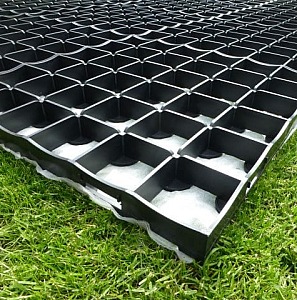
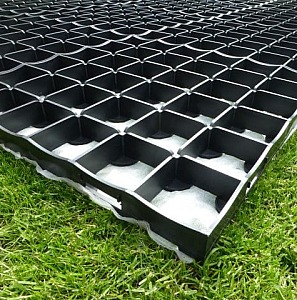
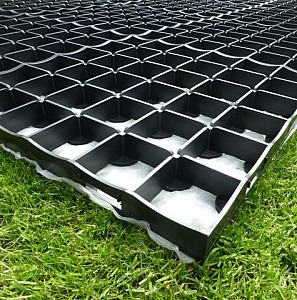
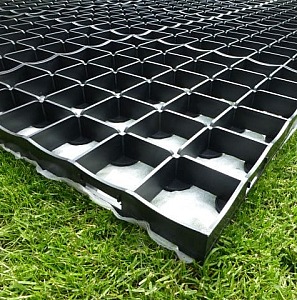
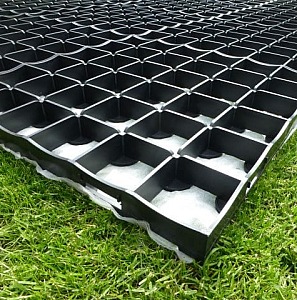
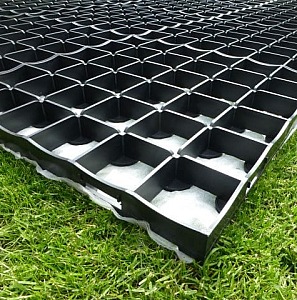
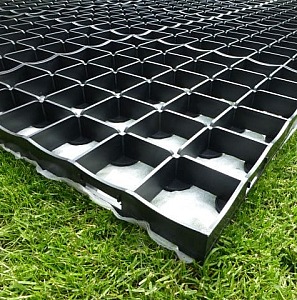
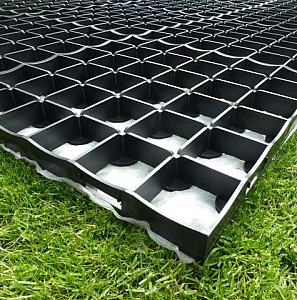
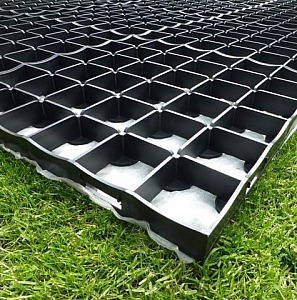
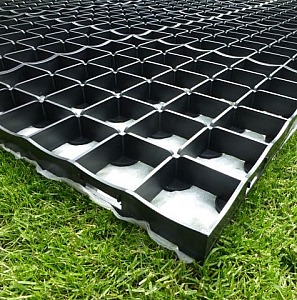
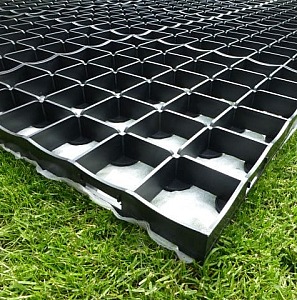
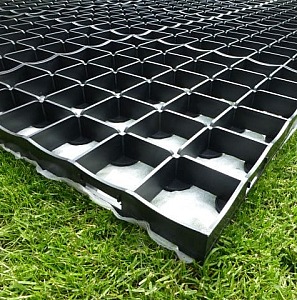
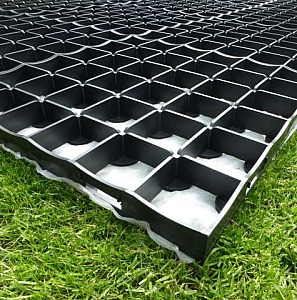
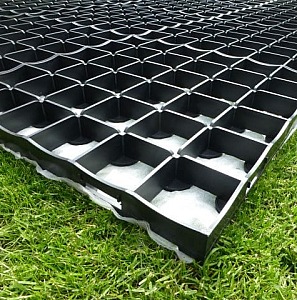
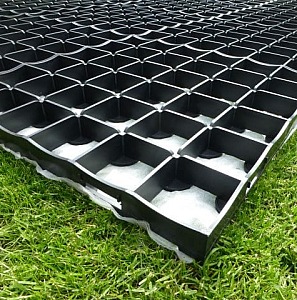
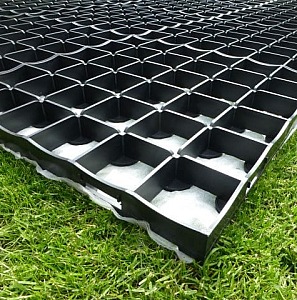
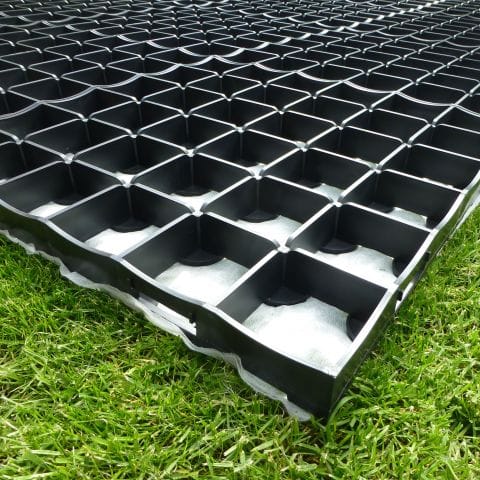
A plastic shed base is a set of square grids that clip together into one flat platform. Every kit here is made by ProBASE. Each grid measures 500 x 500mm and is 40mm deep, moulded from 100% recycled plastic in an open pattern that water and air pass straight through.
You lay a weed membrane on the prepared ground, click the grids together on top, then fill every cell with pea gravel. The grid locks the stones in place so they can't spread or rut the way a loose gravel bed does. The gravel gives the base its weight and strength. The grid keeps it flat.
That mix is why plastic grids have become the most popular shed foundation for DIY. The grids are lightweight enough to carry round the side of the house, yet strong and stable once they're full. They're durable too, because recycled plastic won't rot in wet soil the way timber does. And reusing waste plastic makes them an eco-friendly choice.
Here's what you get in each kit.
ProBASE advises about 15kg of 10mm pea gravel per grid, which isn't in the box, so book a delivery from a local builders' merchant for the same week as the kit. There's no concrete to mix, no cutting and no special tools. And because nothing is fixed down, you can lift the grids and relay them if you ever move the shed. You can read more about the system on the ProBASE website.
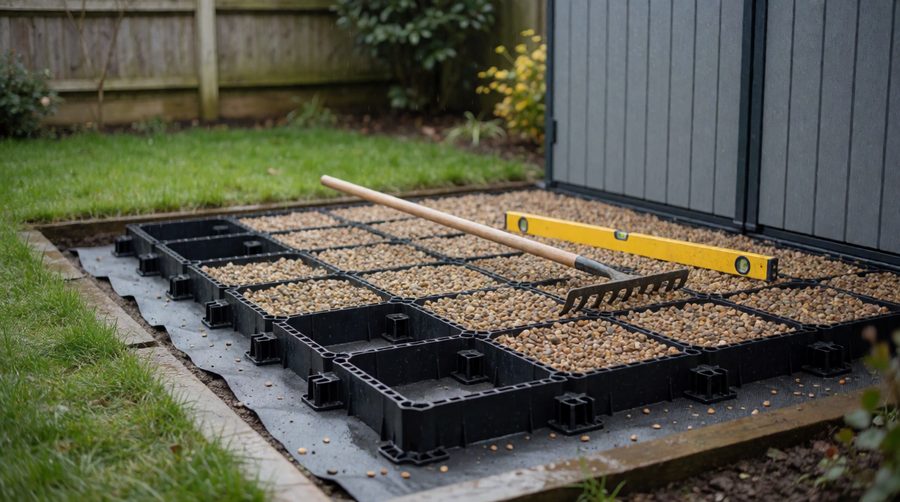
Here's every ProBASE kit Shedstore sells, smallest first. The platform size is the real size of the finished base in metres, which is the figure to check against your shed. Gravel is the total at 15kg per grid. Prices move every day and the grid above always shows Shedstore's current price, so here they're grouped into bands.
| Shed base kit | Grids | Platform (m) | Area | Pea gravel | Price band |
|---|---|---|---|---|---|
| ProBASE 5x5 | 9 | 1.5 x 1.5 | 2.25 sq m | 135kg | Under £125 |
| ProBASE 10x3 | 12 | 3.0 x 1.0 | 3 sq m | 180kg | Under £125 |
| ProBASE 8x5 | 15 | 2.5 x 1.5 | 3.75 sq m | 225kg | Under £125 |
| ProBASE 6x5 | 16 | 2.0 x 2.0 | 4 sq m | 240kg | Under £125 |
| ProBASE 10x4 | 18 | 3.0 x 1.5 | 4.5 sq m | 270kg | Under £125 |
| ProBASE 8x7 | 25 | 2.5 x 2.5 | 6.25 sq m | 375kg | £125 to £250 |
| ProBASE 9x9 | 36 | 3.0 x 3.0 | 9 sq m | 540kg | £125 to £250 |
| ProBASE 11x9 | 42 | 3.5 x 3.0 | 10.5 sq m | 630kg | £250 to £400 |
| ProBASE 12x10 | 48 | 4.0 x 3.0 | 12 sq m | 720kg | £250 to £400 |
| ProBASE 16x8 | 50 | 5.0 x 2.5 | 12.5 sq m | 750kg | £250 to £400 |
| ProBASE 16x10 | 60 | 5.0 x 3.0 | 15 sq m | 900kg | £250 to £400 |
| ProBASE 11x11 | 64 | 4.0 x 4.0 | 16 sq m | 960kg | £250 to £400 |
| ProBASE 9x18 | 66 | 3.0 x 5.5 | 16.5 sq m | 990kg | Over £400 |
| ProBASE 18x11 | 84 | 6.0 x 3.5 | 21 sq m | 1,260kg | Over £400 |
| ProBASE 20x12 | 96 | 6.0 x 4.0 | 24 sq m | 1,440kg | Over £400 |
| ProBASE 5 x 6m | 120 | 5.0 x 6.0 | 30 sq m | 1,800kg | Over £400 |
The kits are named after the shed they're meant for, not the base itself, so the platform is often a little bigger or smaller than the name suggests. The 11x11 kit, for example, builds a 4 x 4m square.
Measure the shed, not the name on the box. A shed sold as 8x6 is rarely exactly 8ft by 6ft, so take the external floor size in metres from the product listing. Then pick a kit whose platform is the same size or slightly larger.
A slightly bigger base is no bad thing. A margin of gravel around the walls gives you somewhere dry to step, keeps grass and soil off the panels and stops rain splashing mud up the sides. You'll find the exact sizes for each model on our Keter sheds and Palram Canopia sheds pages.
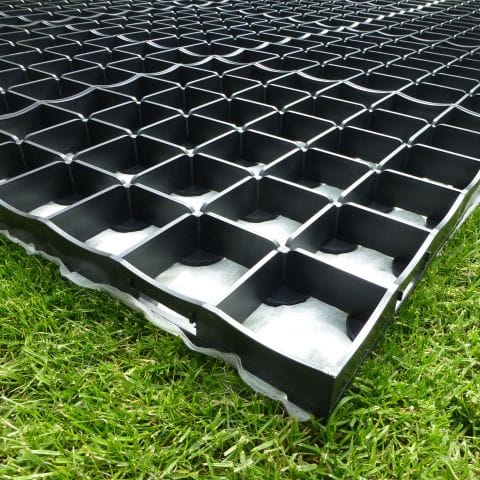
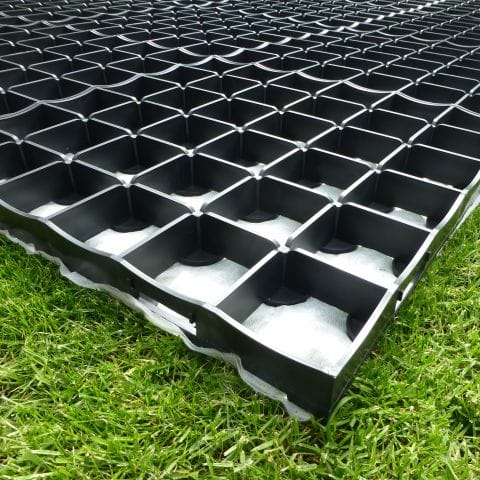
Most people can install a plastic grid base in a morning. Getting the ground ready takes the longest. Shedstore doesn't offer installation for these kits. If you've booked its team to build your shed, the base has to be finished before the fitters arrive.
Then build your shed straight on top. Don't underestimate the gravel, though. The 8x7 kit takes about 375kg and the 20x12 kit over 1.4 tonnes. Ask for it to be dropped as close to the spot as you can, then share the barrow work.
A plastic grid kit isn't the only way to build a shed base. Here's how the main options compare for a typical garden shed.
| Base type | DIY difficulty | Drainage | Cost | Best for |
|---|---|---|---|---|
| Plastic grid filled with gravel | Easy | Excellent | Low to medium | Most sheds, including plastic sheds |
| Concrete slab | Hard | Poor unless sloped | Highest | Workshops and heavy, permanent buildings |
| Paving slabs on sand | Medium | Good | Medium | Small sheds on flat ground |
| Timber frame with gravel | Medium | Good | Low | Wooden sheds with bearers |
| Ground screws or adjustable legs | Easy to medium | Excellent | Medium | Sloping or uneven ground |
A poured concrete slab is the strongest and most permanent foundation. It means digging out around 150mm, laying compacted hardcore and a damp-proof membrane, then building a timber frame to hold the edges. After the pour it needs at least 48 hours to cure. A concrete base suits a big workshop or log cabin that will never move, especially one carrying a heavy load of machinery. For a storage shed it's a lot of work and cost. It's also very hard to take up later.
Slabs bedded on sharp sand give a firm, flat surface for a smaller shed. You may even have some spare. Each slab has to be levelled on its own, which takes patience. Any gaps or rocking slabs will show up in the shed floor.
A pressure-treated timber frame filled with compacted gravel is cheap and drains well. Some people go simpler still with timber skids, a few pressure-treated bearers laid on the ground. The weak spot is the timber itself. Where it touches wet soil it will rot in the end, often long before the shed does, which makes it a budget fix rather than a lasting one.
On a slope, levelling the ground by digging can be a big job. Adjustable systems lift the shed on height-adjustable feet instead. ProBASE's QuickJACK kits come in versions for hard surfaces such as a patio and for soft ground, where the larger sizes use screw piles. Compare them on our adjustable shed bases page.
For most garden sheds a gravel-filled plastic shed base is the best balance. It drains better than concrete and won't rot like timber. It goes down in a few hours without a mixer. Once you add up the materials and labour, it also costs far less than a slab.
Yes, even more than a timber one does. A plastic shed is light and flexible, so a flat foundation matters more, not less. Resin panels are made to fit each other exactly. A floor that dips or twists pulls the doors out of line and stops the panels locking together during the build.
Many resin sheds include a floor. You'll find them in our plastic sheds with floors collection. That floor spreads the load but it isn't a foundation. On soft lawn it will flex and sink unevenly. Some models, like the Keter Darwin potting shed, come with no floor at all, so they need a solid, level platform to stand on.
The best base for a plastic shed is a gravel-filled grid. It's flat, drains freely and won't rot under the shed. Planning something bigger? Our large plastic sheds need the same firm start.
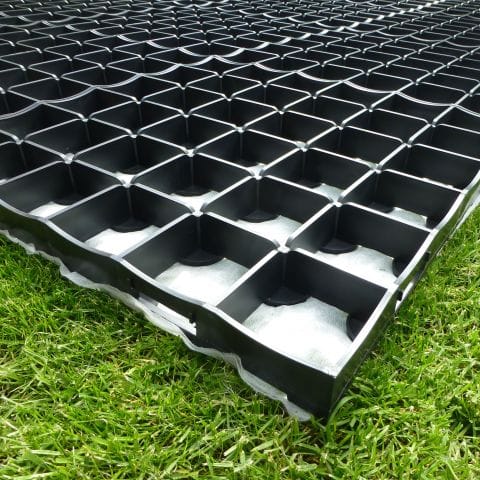
A garden shed base on its own rarely needs permission. In England most sheds count as permitted development, as long as they meet a short set of rules. Among them, the building can't cover more than half the garden or sit in front of the house. Within 2m of a boundary it can't stand taller than 2.5m.
The base matters in one way. A platform raised more than 30cm above the ground is treated as a raised platform, which needs planning permission. A ProBASE grid is only 40mm deep, so it stays well within that. The Planning Portal guide to outbuildings has the full rules. The government's permitted development technical guidance explains each one with diagrams. Scotland, Wales and Northern Ireland have their own versions. Listed buildings and conservation areas may differ too.
Allow roughly 15kg for each grid, then multiply by the grids in your kit. An 8x7 kit with 25 grids needs about 375kg. A 12x10 kit with 48 needs around 720kg.
Not on its own. Lift the turf first, then level and firm the soil underneath. Grass left under the membrane rots down. As it does, the base sinks unevenly and moisture collects under the floor.
For the average garden shed, yes. They're quicker and cheaper, they drain better and you can lift them if you move. Concrete is still the choice for a heavy workshop or a building that needs a permanent slab.
The recycled plastic grids won't rot or rust the way timber and steel can. The maker backs each kit for 2 years. With the gravel in place they're built to sit under a shed for many years.
Yes, the larger kits are sized for them. The 16x10, 18x11, 20x12 and 5 x 6m kits suit summerhouses, garden offices and log cabins. For any heavy garden building, follow the maker's own base advice too.
A small bin store or garden storage box still lasts longer on a level, dry surface. The 5x5 kit is the smallest here, or a few paving slabs work well. Browse our plastic garden storage boxes for the units themselves.
